

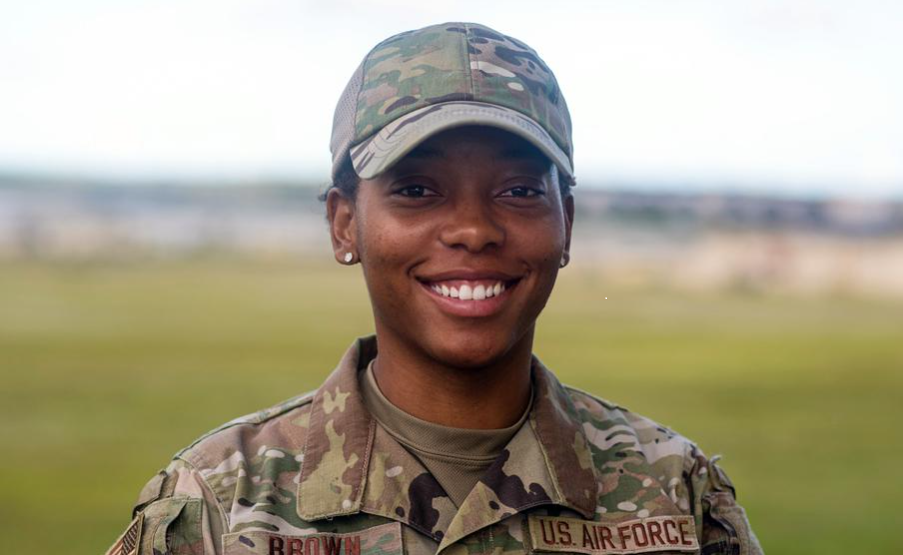
A Guide to Air Force Ball Cap Regulations
Jul 05, 2022
Everyone affiliated with the military knows that the Air Force is always distinctly separate and unique from the other branches of service in how they carry out operations. Just like the Marine Corps is a specialized compartment of the US Navy, the Air Force is a specialized compartment of the US Army.
However, the tide has changed somewhat recently with their uniform standards. They are working to become more tactically minded about how their uniform standards affect their overall uniformity with the rest of the armed forces. To explain this further, you’ll want to read this through a guide to air force ball cap regulations as one faction of these implementations to help broaden the understanding of how things are evolving with the Air Force.
The Importance of Military Covers
The military has always held to having covers instituted as a part of military regulations on uniforms. The original covers were all helmets that were worn to protect the head while in battle. Over time, they would evolve to become known as the cover, which now takes on many different forms.
However, one style of the cover that has become more uniform in operations in the last few years is the OCP cover that has been made of camouflage from the rest of the uniform. During certain operations for other branches of service, there has been the release of a more generalized OCP tactical cap resembling a baseball cap that you might see civilians wearing.
This is to promote a more casual feel to ease the stress and tension of operational groups. It also comes off as less aggressive so that when in foreign countries, soldiers, sailors, airmen, and marines don’t look as menacing toward people who are not their enemies. Ultimately, the goal is to have a standardized cover and uniform pattern across the board from all branches of service that represents the operational conditions of deployed troops, with slight variations to identify differences in branches of service, specialties, and rank.
Standard OCP Ball Cap Regulations
As far as the standard is concerned, the ball cap that has been put into place is a color-coordinating ball cap for the specified uniform of the day, which can either be in the designated camouflage or coyote brown. There are aspects of this cover that use Velcro; however, they are used and implemented differently per the individual. This means that enlisted and officers have different applications to be aware of to make it more visible to identify ranks and individuals in the field.
Officer’s Standards
Per the officer’s wear of the OCP uniform ball cap, the rank will be pinned or put on with Velcro to the front of the cover. It must be in the front and perfectly centered on the cover, and the Velcro cannot exceed the insignia for it to be within regulations. If the officer happens to be a Lieutenant or Lieutenant Colonel, they will wear their insignias in the front and center, only to be bolded in black due to their rank. Officers are the only military personnel allowed to wear any insignia or rank on the front of their tactical OCP Air Force ball cap.
Chaplain’s Exception
There is only one other exception to the rule of OCP ball cap insignias being worn on the front of the cap, which is reserved for the Chaplain’s Corps. This is because in all branches of the military throughout history, there has always been a chaplain corps and a medical corps on standby with every brigade and division or fleet.
The chaplains, in particular, are officers by rank but carry a specialized duty where they remain visible among the ranks, which is why they can wear their insignia and their rank on their designated OCP uniform, including their baseball caps. When out on deployment or operational, troops should always have the ability to seek out their chaplain for spiritual or personal matters, just as they should seek out their medical team for medical situations.
Enlisted Guidelines
The enlisted are given specific orders not to have any rank or insignia on their cover. The exception to the rule is that they have their last name as an identifier strapped to the backside of the cap with Velcro, just as the officers also have. This makes ease of identification at long ranges in large groups in the field when looking for the enlisted and officers.
Commanding Officer’s Rule
Although these regulations may be the new standard throughout the Air Force, there is no appeal for the executive order given out through a chain of command’s commanding officer. There is always one senior officer selected to be the commanding officer of any particular command.
All uniform regulations are based upon the orders of that commanding officer (CO), including the uniform of the day and the OCP uniform. So, if that CO states that there will be no new ball cap worn yet at the command, then that is the rule, and orders must be followed among military personnel.
Female Special Regulation
There are also specialized regulations for female personnel. Per orders across all branches of military service, all female service members have the option of keeping their hair a certain designated length. This is much longer than male personnel, as it is shoulder length, the longest it can be within regulations.
However, in uniform, female veterans, no matter if they are enlisted or officers, have to wear their hair up in a bun. When worn with a ball cap, the regulation is that they may pull their ponytail through the back end of the hat and wear it accordingly to maintain uniformity across the board with the rest of the military.
As you can see, many changes are happening in military regulations regarding military standards with uniforms and tactical and operational covers. This has been a detailed look at a guide to Air Force ball cap regulations so that you can be better informed on where the Air Force is headed with their combat uniforms moving forward.
