

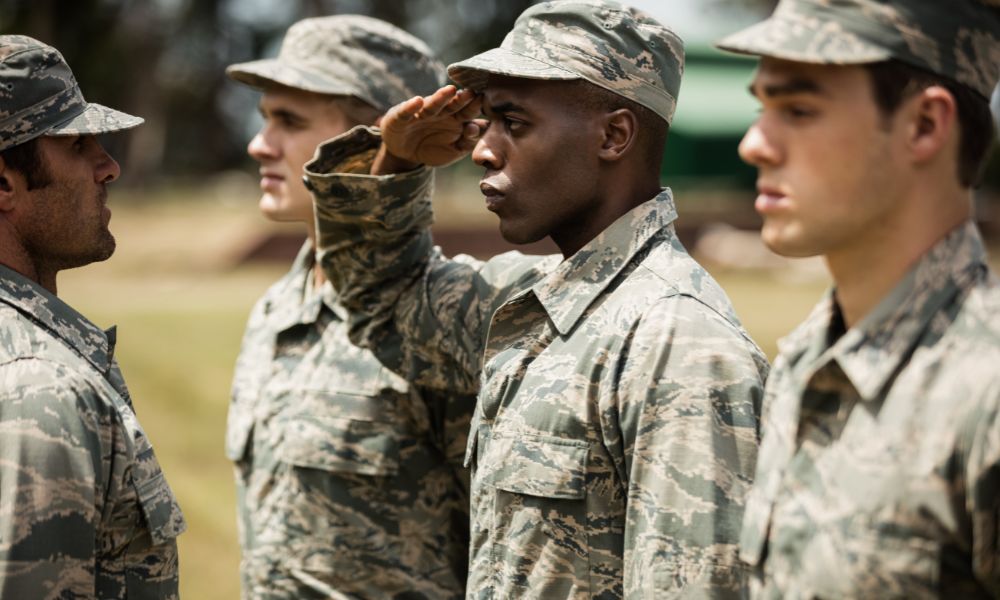
Camouflage Over the Years: How Military Fabrics Have Changed
Jul 20, 2022
Due to the circumstances of warfare, camouflage has become a necessity across all theaters of combat. The military learns something new from each war about the terrain and the types of camouflage it takes to blend in anywhere. Here is a list of how military fabrics have changed from the First World War to the present.
Camo During WW1
If you know anything about the First World War, you know how brutal it was. Soldiers on both sides of the battlefield found themselves fighting in trench warfare, which required them to raise their heads and torsos outside of the protection of the trench when shooting down range.
Americans adopted a key tactic from the Germans: painting their helmets to blend into the surroundings. This would be one of the first times we would see actual camouflage on military uniforms in American history.
WW2 Upgrades
By the time WW2 arrived, there was a significant change in the landscape of camouflage patterns. A horticulturist named Norvell Gillespie designed the Frog Skin pattern in 1942 explicitly for troops that fought in the Pacific arena during the war.
This pattern had obscure shapes that looked like overlapping leaves in five shades. The background was a lighter green, which ultimately didn’t always work in the darker jungle.
Jungle Camo
By the time the Vietnam War began, uniform standards had changed. After the Frog Skin pattern made its debut, there would now be a similar implementation for a slightly different arena.
This uniform would include a painted helmet covered with a more natural look, which would separate itself from the rest of the uniform to look even more hidden in the brush. There would also be an additional non-issued camouflage introduced during this time known as the “tigerstripe,” which had more wooded coloring with stripes.
The jungle camo uniform would then naturally evolve into what was known as the “woodlands,” which was the new post-Vietnam jungle camo. Members of the armed forces used this fabric for general purpose wear along with the tactical base layer clothing underneath.
Desert Camo
During the time around Desert Storm, we would see the rise of a new style of camouflage that would have to mimic the desert terrain. What first came out was what would be known as “chocolate chip,” which the government issued from 91–93 as the Battle Dress Uniform (BDU). This fabric included a color scheme of six desert-like colors that, together, resembled chocolate-chip cookie dough. This would soon evolve into what the military would call “coffee stain,” which only had a three-color scheme pattern.
Digital Camo
Finally, the most modern form of camouflage is “digital camo.” This camouflage also uses a tricolored scheme with grey, tan, and green. The unique features of these patterns allow them to mimic virtually any terrain.
All military fabrics change over the years, and camouflage is no exception. As research continues, the military will continue to innovate with more effective fabric patterns that keep those in combat safe.