

How Military Uniforms Have Changed Over Time
Nov 19, 2021
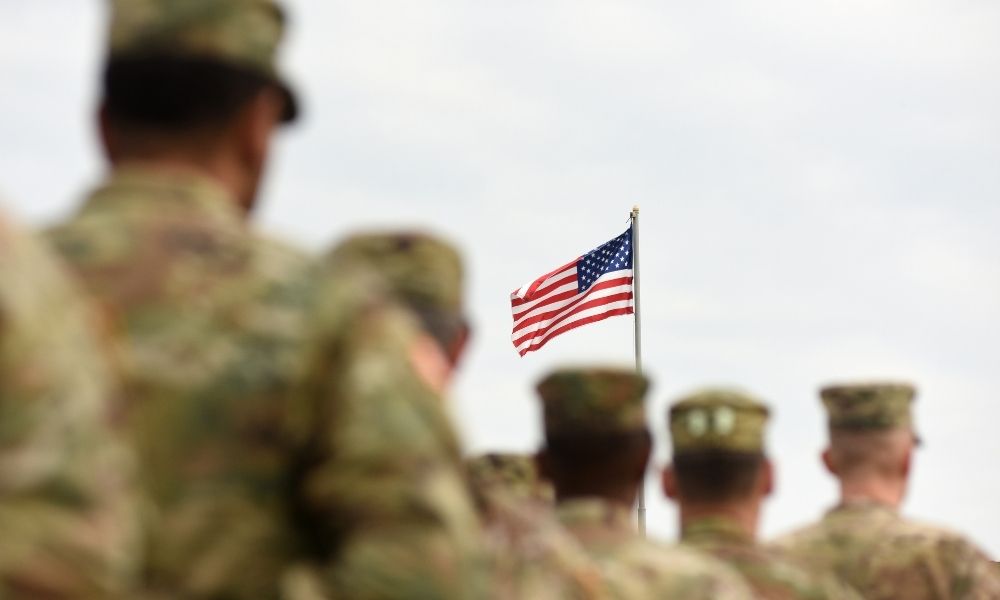
The U.S. Army military uniform has become an iconic standard for professional militaries, but the military uniforms for sale today have come a long way from their 18th century British Army roots. Learning how military uniforms have changed over time is a great way to see how American identity formed and distinguished itself over the relatively short time the country has been around.
The First Iteration (1779-1782)
Clothing of the 18th century distinguished itself with tightly fitting smallclothes and coats with tight-fitted sleeves made with linen or wool, depending on the time of year. Regulations published in 1779 established the first iteration of the U.S. Army uniform—blue with colored facings based on region: White for New England, red for the Mid-Atlantic, and blue for the South. By 1782 blue coats faced with red became the standard for all military personnel except generals and staff officers.
Early America (1786-1833)
By 1812, the standard for uniforms became confused as a result of a shortage of blue cloth. Because of this shortage, coatees made of drab, black, brown, or grey cloth went to various regular infantry regiments between 1812 and 1813. These followed the same regulations but with red cuffs, collars, and white binding. However, the white binding disappeared altogether in early 1813, and the uniforms changed once more.
The new uniform coatee was single-breasted with a 10-button closure in front. The red cuffs and collars were discontinued, with only a lace binding added on the coatee’s collar—white for infantry and yellow for artillery. This 1813 revision also introduced a new cap, called a “shako,” based directly on the Belgic type cap the British infantry wore. This would be the uniform standard moving into the 1820s.
Mid-19th Century (1833-1850)
The next change in uniform regulations would come about once the American army structure changed. The coatee issued in 1833 wasn’t much different from its predecessor—featuring one less button for privates that featured a new pattern. Worsted epaulets replaced the previously used shoulder wings. The white and yellow lacings meant to distinguish infantry from artillery persisted; however, the new regiment of dragoons now also used the yellow lace.
Branch insignias were introduced during this period, matching the color of a soldier’s distinctive lacing. This new insignia featured an eagle carrying a hunting horn for infantry and an eagle with crossed gun barrels for artillery. Dragoons would receive a bi-metal insignia that featured a yellow federal eagle on a white metal sunburst.
Mid-19th Century Con. (1851-1872)
The next uniform revision would come in 1851; however, this iteration was short-lived. This change introduced the frock coat as the new service uniform for all soldiers, eliminating the coatee entirely. A new system for branch colors also came about: Prussian blue for infantry, scarlet for artillery, orange for dragoons, green for mounted rifles, and black for staff.
The regulation changes that came in 1858 and 1860 would become the defining uniform for the Union soldiers during the American Civil War. It featured a black felt army hat with appropriate branch insignia, the frock coat with branch piping for foot troops, and uniform jackets with branch-colored lace for mounted troops with sky-blue trousers. Four-button blue wool sack coats, as well as forage caps, were also available and authorized for fatigue and field wear.
Late 19th Century (1872-1902)
During this period, the Army decided to make uniform regulation changes based on field experience and recommendations, so we began to see some more practical decisions. When it came to field service, Assistant Surgeon Woodhull recommended that the Army adopt the “Swiss Blouse” because it had the distinctive feature of four pleats running down in front of the shoulders to the bottom of the skirt. This unique pleat design came to be revolutionary, as it introduced the concept of layering. The issued coat was loose enough to wear with up to three wool shirts and a waistcoat without restricting a soldier’s freedom of movement. This was ideal for staying warm and fighting during the winter. Unfortunately, the average soldier almost universally despised this coat, and the concept of layering would not be revived again until World War II by the Quartermaster Department.
Early 20th Century (1902-1926)
Between 1902 and 1904, the Army introduced a staggeringly large variety of rank, branch, and specialist insignias in bright colors for full dress and in drab or bronze to wear out in the field. The next change in military uniforms wouldn’t come until World War I began in the summer of 1914. World War I had a near-immediate impact on Army uniforms. Most notable was the color change to military service uniforms due to the sudden absence of German-dyed wool. American manufacturers could not match the German formula that created that drab olive color, so instead, many U.S. uniforms were a khaki color.
Mid-20th Century (1926-1956)
In 1938, Service breeches for winter and summer were phased out for all units except mounted soldiers and replaced with patterned 1937 service trousers in light olive drab wool serge for the winter. In the summer, they were khaki-colored cotton.
As the numbers of the U.S. military began to swell to the millions, the number of insignia designations continued to grow as a reflection of the increasingly large and complex structure the military force had become. Technician grades appeared in 1942, indicated by a “T” centered below a soldier’s chevrons. T/5 was equal to a corporal, T/4 to a sergeant, and T/3 to a staff sergeant. However, these ranks were not NCOs in a leadership role.
In 1941, the blue denim fatigue uniform phased out in favor of twill uniforms in a familiar olive drab. This new fatigue uniform had a dual purpose, useful as both fatigues and a uniform on the field. It featured a single-breasted uniform with five black metal tack buttons and a waistband with two additional buttons. The accompanying jacket had a notched lapel with a full collar and two patch-type breast pockets with a split pleat in the center and a flap secured by a metal tack button. In 1942, an improved version of this twill uniform would be issued based on feedback from field experience, and in 1943, the color darkened to an olive drab shade 7.
Late 20th Century (1954-2006)
With the end of World War II, the Army began contemplating changes to the uniform once more but wouldn’t begin to implement them until 1954. The U.S. had embraced the philosophy that officers’ and enlisted soldiers’ uniforms should be the same, distinguished only by insignia. The same year, the official uniform color became a greener shade, but these uniforms wouldn’t be made standard until 1957 or made mandatory until 1961, after the old uniforms wore out.
In 1963, uniform production shifted toward tropical combat clothing to meet the needs of the Vietnam war. This illustrates how military uniforms changed over time to address the most urgent needs of the era. These uniforms used wind-resistant poplin with two slanted bellows-type breast pockets and two bellows-type lower pockets on the coat. These pockets had flaps secured with two plastic buttons, an interior button over the gas flap, shoulder loops, and a double-button adjustment tab on each side of the waist.
A descendant of the tropical combat uniform would gain popularity in 1981 as the Battle Dress Uniforms or BDUs. Made with a nylon and cotton blend in woodland pattern camouflage, these BDUs proved to be too hot in tropical climates, however, and the old Vietnam-era uniform was allowed while adjustments took place.
Present Day
For many years, the iconic pattern was the digital camouflage, first devised by the Marines. However, the most recent uniform change was back in 2015 with the issuing of the operational camouflage pattern to the Army, Air Force, and Space Force.
