

The History of U.S. Military Patches
Nov 19, 2021
British soldiers first wore embroidered military patches during the 17th century—specifically, officers wore them to indicate their higher rank. These patches became an effective way to distinguish between military divisions, and America later adopted the practice for its own military, beginning the history of U.S. military patches.
Early Patches
Adopted early in the 1800s, American military patches were in use throughout the War of 1812, the 1846 Mexican-American War, and the Civil War. But the patches were crude and unofficial because embroidered patches were still handmade and, thus, were nearly impossible to standardize. Instead, a soldier’s loved ones on the home front often made these patches as mementos.
Standardization of Patches
With the dawn of the Industrial Revolution, the invention of the sewing machine and powered embroidery machine gave rise to the rapid and consistent production of military patches. These machines resulted in patches that were far cheaper and faster to produce.
During World War I, the Army’s 81st Infantry Division created the first shoulder sleeve insignia, better known as a tactical patch. These caught on quickly because they not only functioned well to distinguish divisions but added a bit of personal flair to the uniform. The 81st Division had trained at Fort Jackson in South Carolina, situated near a body of water called “Wildcat Creek,” so they based their patch design on the silhouette of a wildcat. Within the next two decades, every Army division had its own uniquely designed shoulder sleeve insignia.
Modern Day Patches
Since then, tactical patches have been the norm, though their style has evolved over the century. Instead, regulations for these patches have developed to dictate how one can display them, how many to wear at one time, and what patches take precedent over other patches. The most recent and notable change to military patches, however, was back in 2015 with the issuing of OCP patches, which are patches that utilize the same camouflage as a soldier’s uniform. Regulations before the change had demanded that flag patches must remain the American flag’s actual colors out of respect for it; however, the change made sense because the bright colors risked giving away soldiers’ positions, rendering their camouflage pointless.
“Backward” Flag Patches
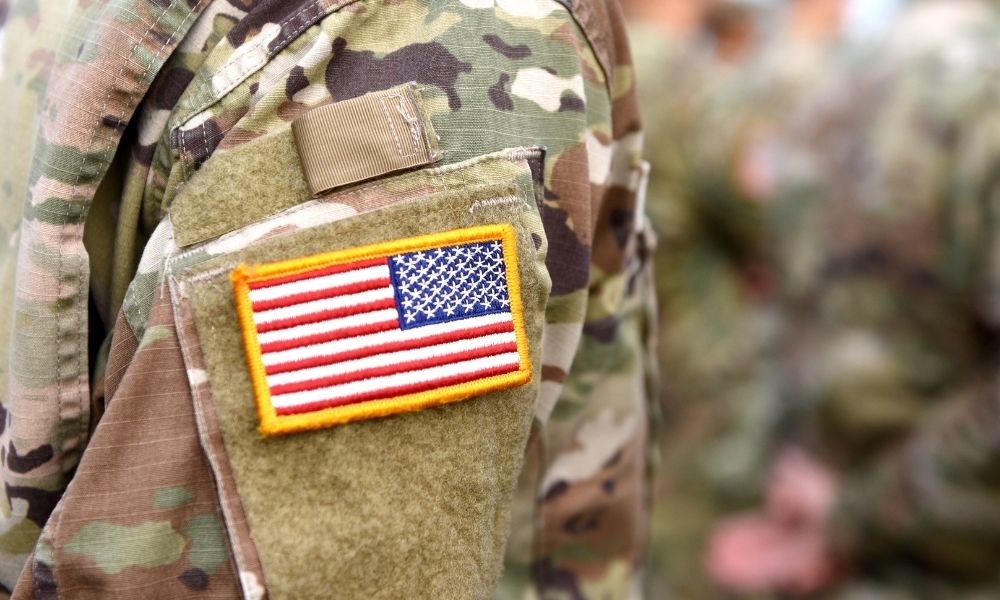
Throughout the history of U.S. military patches, you may have noticed soldiers wearing American flag patches backward on their right sleeves but forward on their left sleeve. Army Regulation AR 670-1 requires that the star field of the flag always be towards the front. This gives the appearance of the flag being carried into battle.