

What Materials Have OCP Uniforms Been Made of Over Time?
Nov 19, 2021
Camouflage may not be a relatively new concept, but its applications have only recently been tapped into as something more tactical and useful in military applications. Starting as early as the first world war, the U.S. military has attempted to configure how to best implement camouflage into the uniform without taking away from the traditional military dress. This has become a shift between effectiveness and traditions, which have conflicted somewhat with one another, as change is always a hard thing to accept.
Starting with the operational component and then working into the tactical, camouflage has been on a tight rope for years to find its footing, with slow progress, but it would eventually figure out what works best for each particular branch of service. So, this would lead to the question of what materials have OCP uniforms been made of over time, and what that looks like moving ahead.
Moving From the ACU to OCP
Starting as early as the nineties, the U.S. Army had an original camouflage pattern that they had been experimenting with. It was known as the ACU, or Army Combat Uniform. It featured a multi-camouflage pattern that was dark and indicative of a shadowy terrain, which wasn’t as successful overall in combat settings while in Afghanistan. In fact, it was the least successful of all military camouflage uniforms in history.
Then came its replacement in the mid-2010s, the OCP uniform, or Operational Camouflage Uniform. This uniform would prove to be revolutionary in terms of what they had used prior to the new rollout from many different levels of understanding about military uniforms and how they operate.
The Scorpion OCP
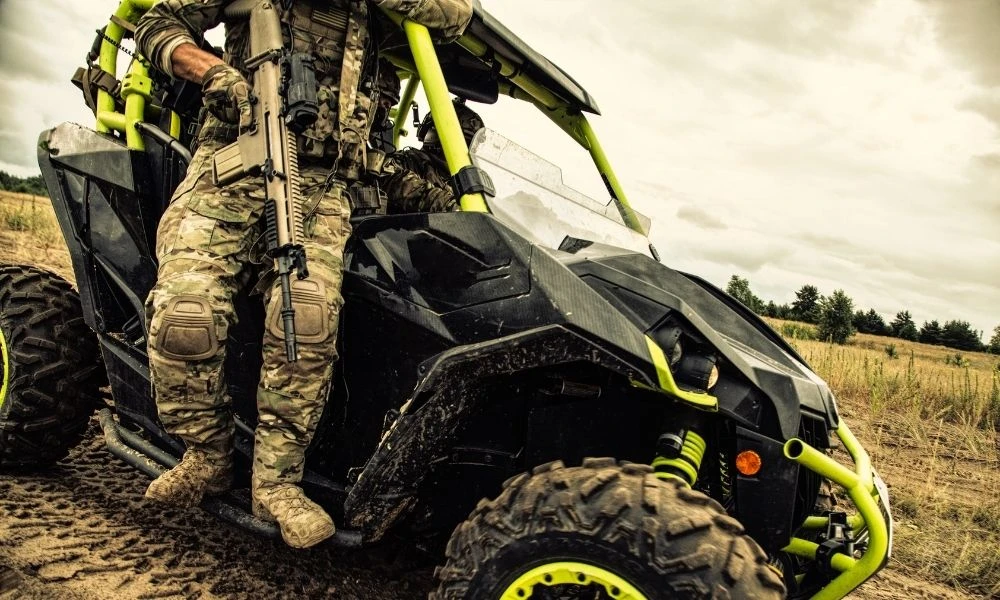
This new design was known as the “Scorpion,” as it had more native coloring to the geography where they had been fighting, such as Afghanistan. Not only that, but there was a shift from the digital patterns that were previously used to a more natural pattern to simulate nature. Coming from its predecessors, the Scorpion pattern was similar to the ACU with its dark jungle woodland patterns.
Alternatively, it would use light desert color schemes and patterns for desert terrain that would be later implemented. The Scorpion OCP gear would be made with ripstop polyester/cotton blends, making it both extremely durable and lightweight. This would make it ideal for outdoor weather and active wear, which made it the choice material for these uniforms, as they would be worn in the desert for long periods of time. The makeup of these materials would be 50% type 66 nylon, 50% cotton ripstop, medium to lightweight, 7.4 oz/sq. yard, while the lightweight would weigh in at 4.3 oz/sq. yard.
Hot Weather OCP Combat Uniform
More specific to extreme conditions, in 2020, the Hot Weather OCP became authorized for wear on duty in hot weather applications and wet weather conditions alike. It would be made from a 57/43 nylon cotton blend which would prove to be softer, lighter, and more breathable than anything the troops had before. Combat effectiveness immediately increased as soon as these uniforms were implemented into daily wear. Having to wake up in a blazing hot environment that only has one season can be a challenge if you are not properly equipped for it.
OCP Uniform Boots
Unlike the hard leather, all-black polished classic military boots of the past, we had to adopt a new operating procedure with this new terrain. It would be impossible to keep black boots clean, and they can be somewhat cumbersome to move around in. Knowing this, the Army invested in a new combat boot that would feature dark desert suede and nylon mesh on the tops as well as a thick rubber outsole, sides, and upper with a safety toe. These boots would perform extremely well in this climate and allow for troops to maneuver around much easier.
OCP Combat Shirts
Much like with the rest of the uniform, these shirts would have a multi-use function as a part of the service uniform while on duty, and for activewear and general wear while in the desert areas off duty. These shirts would be made of poly-blend but would also have mesh implemented for extra breathability to help with sweat and circulation. When in hot, dry climates like that, it’s very important to restrict the amount of sweat that occurs to keep yourself hydrated so that you don’t suffer from heatstroke or exhaustion. These shirts would be 499 coyote brown as per regulation.
OCP Uniform Tactical Caps
Like most deployed scenarios, the OCP uniform designated a baseball cap as the preferred headcover. Thus, these tactical caps would be made with the camo pattern to match the rest of the uniform, with a coyote brown mesh back. The regulation for last names would be altered to the back end of the cap so that they could be visible. There were conditions for this as well. The veteran could either have them sewn on, or Velcro would be applied for easy removal or adjustment.
Authorized Cold Weather Clothing
The last piece to the puzzle would be cold weather uniform applications. There are still thoughts up in the air about this part of the OCP uniform that may need review. No official uniform has yet to be authorized for this scenario; what is authorized is the Army’s attempt at layering, which they call ECWCS, that would be a uniform construct without any officiated uniform. This means that layers would and could be added to and taken off the base layer to adjust to cold weather conditions.
So, the OCP, or Operational Combat Pattern Uniform, has seen some alterations and adjustments while in service, as most uniforms do. This uniform sprung up on the Army after years of using their ACU that was highly ineffective, so you can understand how highly anticipated it must have been to have something that made sense in the desert climate. Let’s not forget the camouflage factor that blended with the environment; this would save many lives and improve military performance across the board.
The OCP was so effective, in fact, that throughout the years, every service branch would put their own spin on it to call it their own. We hope this article has answered the question of what materials the OCP has been made of over time.
